3 Miracles That Prove Jesus is God
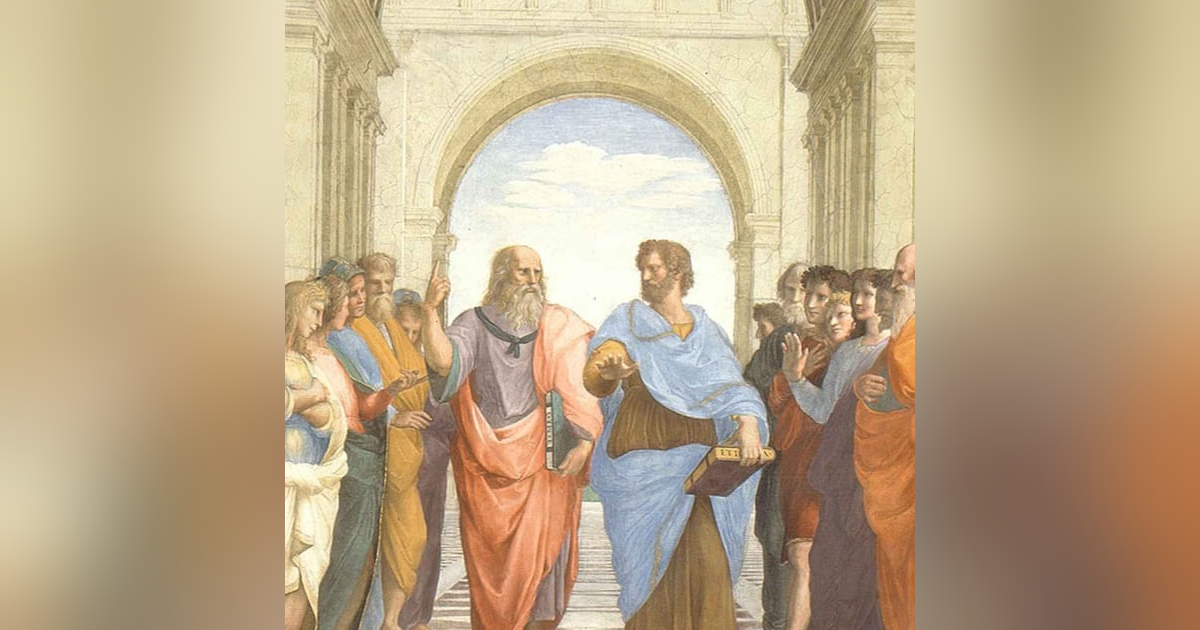
Moving from diagnosing sin to actually curing it


Discover how Jesus moved from merely diagnosing sin to actually curing it. We explore Matthew 8-12 to reveal the profound difference between legal observation and spiritual restoration.
What You'll Learn:
- Why the Old Law was like a health inspector, while Jesus acts as a surgeon.
- How the healing of the paralytic provides the biblical receipt for the Sacrament of Confession.
- The allegorical meaning of the "withered hand" as a soul unable to perform good works.
Timestamps:
- (01:02) - Leprosy and Authority over the Law
- (02:10) - The Paralytic and the Invisible Miracle
- (03:35) - The Withered Hand and the Sabbath
⚠️ Disclaimer: Voices are AI-generated. Content is checked and grounded in historic Catholic texts, but errors may occur. This is a study aid, not a substitute for your intellect or priest.
🎙️ About: The Depositum uses AI to explore the Deposit of Faith via the Douay-Rheims Bible, Council of Trent, and Haydock Commentary. We make dense theology accessible to help you come to know Jesus.
🎵 Music: "Miserere Mei, Deus" by Allegri (Ensamble Escénico Vocal). Source: Wikimedia Commons. License: CC BY 3.0.
🧠 Dive Deeper:
- Ask your own questions in our public NotebookLM - https://notebooklm.google.com/notebook/be82a7bc-321c-4ebd-b98c-d7e2621b00d6
- Or explore the data in our GitHub - https://github.com/Data-Science-Link/the_depositum
Hosted on Acast. See acast.com/privacy for more information.
I'm Michael Link, and welcome to The Depositum, where we explore the depths of Christian theology
through AI. Please note the voices ahead are AI generated. We vet each episode,
but ask that you listen with both faith and reason. Let's dive in.
Welcome back to The Deep Dive. Today we're opening up the Gospel of Matthew to track a
pattern that is incredibly easy to miss if you're just reading. We're looking at the
escalating authority of Jesus. It's a really fascinating progression. If you look closely,
you see, we're not just witnessing a new prophet who's showing up to, you know,
remind everyone of the rules. No. We're watching the very beginning of a new law.
Right. And the shift is just, it's profound. It's a move away from a system that can only
declare you clean to one that actually creates cleanliness. That's the core of it. I mean,
it's the difference between a doctor just diagnosing a sickness and a surgeon who can
actually go in and cure it. So let's jump into the first case, authority over the law itself.
We're in Matthew chapter 8, and the context here is, well, it's terrifying. We're talking
about leprosy. Which in the ancient world was, I mean, it was social death. You were
completely cut off from your family, from the temple, from everything. And if a leper
even approached a clean person, they were risking their life. But just listen to how Jesus
handles this. Reading Matthew chapter 8 verses 2 and 3.
He touched him. He touched him. That's the detail that would have just stopped everyone
in their tracks. So under the old law, a priest was sort of like a, like a health inspector,
right? That's a good way to put it. The priest could only look at a leper who had
healed and declare him cleansed. He couldn't do anything to cause the healing. Just verify.
He's verifying. But Jesus introduces something totally new. He doesn't just declare,
he acts. He replaces that ritual derumeration with an actual cleansing.
And if cleaning the body was controversial, what happens next in Capernaum?
It's just scandalous. He moves from the skin to the soul.
Right. This is the famous scene with the paralytic. The man is lowered through the roof.
The scribes are watching and everyone is expecting a medical miracle.
But Jesus pivots completely. He starts talking about sin.
Here is Matthew chapter 9 verses 5 through 7.
It's such a brilliant question. Weather is easier to say.
Exactly. It's so much easier to say, I forgive you because who can prove you did it. It's
invisible. So that's the invisible miracle.
Precisely. So to prove he has the authority for the invisible miracle,
he performs the visible one. He makes the man walk.
The physical healing is the receipt for the spiritual one.
That's a great way to put it. And the Council of Trent connects this directly to
the priesthood. It says that Christ as man received this power and then, well,
communicated it to his priests. So when a priest in confession says,
I absolve you, it carries that same delegated authority. It's not just a wish. It's an act.
It's the same power that told the paralytic to get up and walk.
Which brings us to the final conflict. We've seen authority over the body,
the soul. Now it's authority over the Sabbath itself.
And the tension here is just immense. The Pharisees are watching.
There's a man with a withered hand and the trap is set.
If Jesus heals him, he's working on the Sabbath. But he doesn't hesitate.
Reading Matthew chapter 12, verse 13, then he sayeth to the man,
stretch forth thy hand, and he stretched it forth,
and it was restored to health even as the other.
It was restored, not just healed, but made whole again.
And Hadock's commentary has this beautiful allegorical take on it.
The withered hand is like a soul that's dry, you know, unable to do good works.
So the command, stretch it forth. It's more than just a physical instruction.
It's about our cooperation. It's the human attempt to obey.
And in that attempt, Jesus doesn't just demand obedience,
he restores our very ability to obey. He brings life back to the limb.
So when you look at all three, the leper, the paralytic, the withered
hand, Jesus is the divine physician. He didn't come to just give us a
checkup. No, he moved us from a law that just
checks for cleanliness to a new law that actually creates it.
He absolves and he restores.
And I think that's the question for us, isn't it?
Do we just look for rules to check off a list, or do we actually seek out the
restoration that he offers? A shift from just legal observance to
real spiritual life. A lot to think about. Thanks for diving in with us.


