Why The Depositum Uses Historical Texts
When listeners first encounter The Depositum, a question almost always surfaces from those with a background in theology:
"Why are you ignoring the last 500 years of the Church? Why use the Council of Trent and the Douay-Rheims instead of Vatican II, the 1983 Catechism, or the modern New American Bible (NABRE)?" This valid concern gets to the very heart of why this project operates the way it does. Here is a look behind the curtain at the legal boundaries of our Digital Catechist.
The Copyright Wall: Why We Use Older Texts
The decision to rely on historical texts is not a theological rejection of the modern Magisterium. It is a strict, unavoidable legal necessity.
The answer lies in the intersection of Canon Law and modern copyright law. Modern Biblical translations (like the NABRE or RSV-CE) and recent Magisterial documents (like the documents of Vatican II or the 1997 Catechism) are heavily copyrighted by publishers, the USCCB, or the Vatican.
Creating a derivative, AI-generated audio work using these modern texts without explicit—and potentially expensive—licensing is a direct violation of copyright law. If we fed the NABRE into our AI brain, the project could be served a cease-and-desist overnight.
Why does the Church copyright its texts? Sometimes, when people hear this, they become instantly critical of the Church. "Shouldn't the Word of God be free?" they ask. But if we look at this in a different light, the Church's strict control over these texts makes perfect sense. The Church has a sacred duty to protect the integrity of the Depositum Fidei. By holding the copyright, the USCCB and the Vatican can prevent bad actors from publishing intentionally mistranslated Bibles or altering the Catechism to promote heresy. The copyright can be thought of as a modern legal tool used to guarantee that when you read a Catholic text, you are reading the authentic, approved translation.
However, while this protects the integrity of the text, it creates a massive hurdle for independent creators.
To be completely transparent: my initial preference was to use the modern texts. I would love to use the NABRE so the podcast perfectly matches the readings you hear at Sunday Mass, and I have nothing against the brilliant, clarified theology of the last 50 years.
But I am a solo creator, and this is a side project. Navigating the complex, time-intensive legal process of acquiring official ecclesiastical approval and licensing fees was simply impossible for a proof-of-concept. I wanted to build something high-quality and go to market quickly to see if this idea even resonated with people.
To make this project truly Open Source, legally bulletproof, and uncancellable right out of the gate, we had to look further back. We rely entirely on the public domain. The Douay-Rheims Bible, the Catechism of the Council of Trent, and the Haydock Bible Commentary are all entirely free from modern copyright restrictions. This allows us to train our AI on pure, unfiltered, historically robust Catholic orthodoxy without fear of legal takedowns.
If The Depositum becomes popular and the community finds it truly edifying, I would gladly go down the time-intensive path of seeking official permission to integrate more recent texts. But for now, the timeless beauty of our historical tradition serves as a brilliant, and legally safe, foundation.
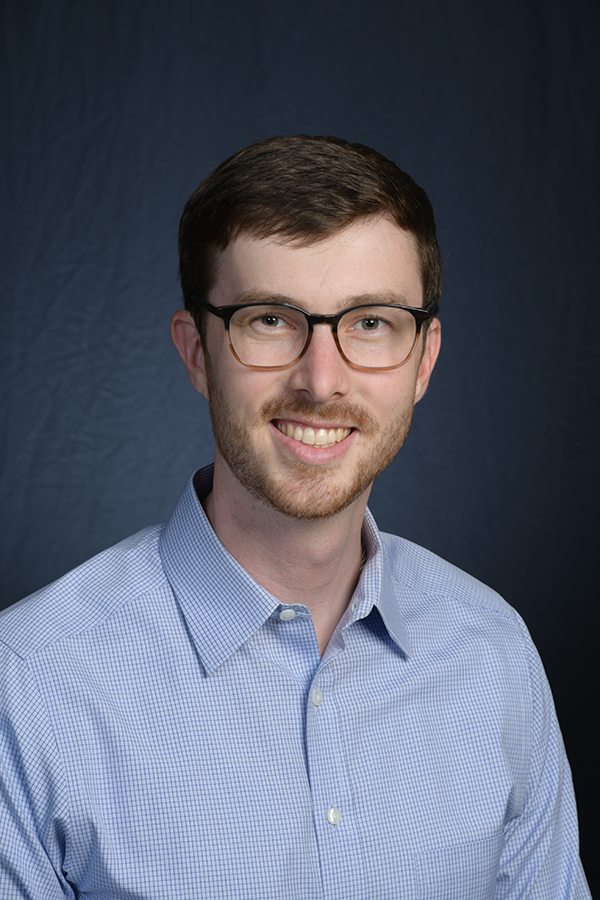
Produced and directed by Michael Link, a data analytics engineer, the Depositum uses artificial intelligence to explore the depths of Catholic theology. Michael selects the foundational texts and theological topics, while two AI-generated hosts synthesize the material into a reverent, 5-minute audio experience.


