The Warning You Missed in the Christmas Story
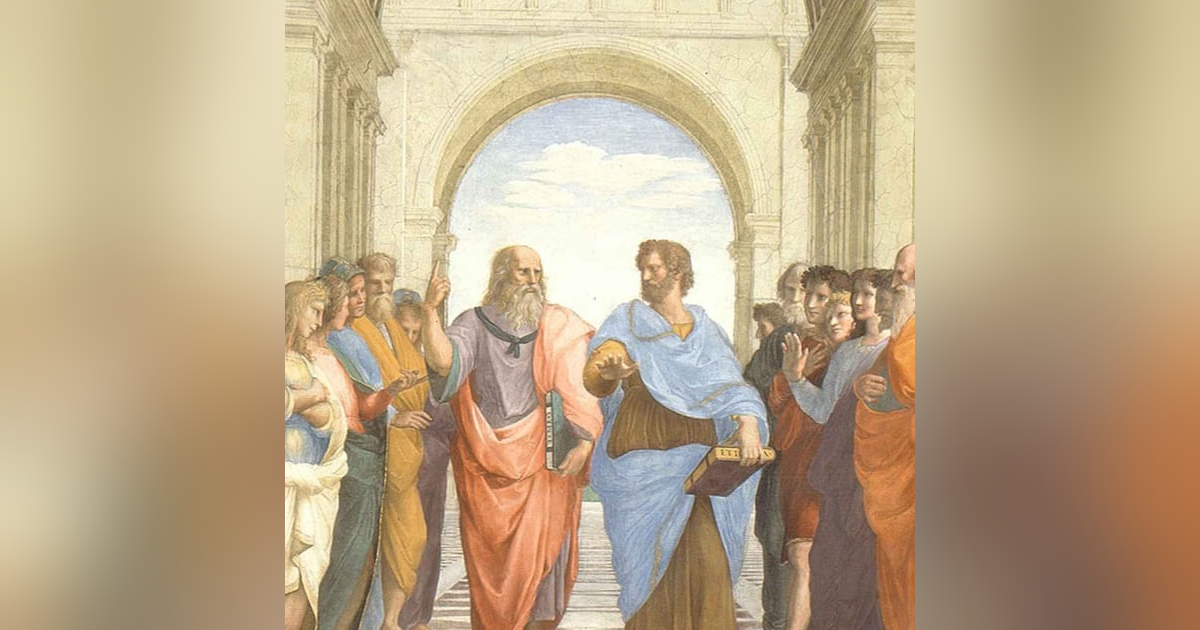
From the wood of the crib to the wood of the cross


The manger scene wasn't just about peace—it was the start of a spiritual war. Discover the "dark" prophecy that turned Mary’s joy into a sobering reality.
What You'll Learn:
- Why the "Sign of Contradiction" forces an inescapable choice for every human soul.
- The deep connection between the wood of the crib and the wood of the cross.
- How to identify and strip away spiritual hypocrisy using the insights of the Church Fathers.
Timestamps (Chapters):
- (00:00) - Introduction
- (00:43) - Meeting Simeon: A Lifetime of Waiting
- (02:04) - The Prophecy: Luke 2:34-35 Unpacked
- (02:39) - A Mark for Malice: The "Target" on Christ
- (03:28) - The Piercing Sword: Mary’s Sorrow and the Cross
- (04:00) - Revealing Hearts: The End of Hypocrisy
- (04:35) - Final Thought: Where Do You Stand?
⚠️ Disclaimer: Voices are AI-generated. Content is checked and grounded in historic Catholic texts, but errors may occur. This is a study aid, not a substitute for your intellect or priest.
🎙️ About: The Depositum uses AI to explore the Deposit of Faith via the Douay-Rheims Bible, Council of Trent, and Haydock Commentary. We make dense theology accessible to help you come to know Jesus.
🎵 Music: "Miserere Mei, Deus" by Allegri (Ensamble Escénico Vocal). Source: Wikimedia Commons. License: CC BY 3.0.
🧠 Dive Deeper:
- Ask your own questions in our public NotebookLM - https://notebooklm.google.com/notebook/be82a7bc-321c-4ebd-b98c-d7e2621b00d6
- Or explore the data in our GitHub - https://github.com/Data-Science-Link/the_depositum
Hosted on Acast. See acast.com/privacy for more information.
I'm Michael Link and welcome to The Depositum, where we explore the depths of Christian theology
through AI. Please note the voices ahead are AI generated. We vet each episode,
but ask that you listen with both faith and reason. Let's dive in.
You know, we think of Christmas as ending with this, this quiet piece. Shepherds,
a gentle scene. A very serene image, right? But 40 days after the birth, the entire scene
just shifts drastically. We're now in the temple. In Jerusalem. And the atmosphere is,
it's nothing like that manger scene. It's vast. It's echoing. And it feels heavy,
heavy with this ancient expectation. Exactly. And that is where we meet Simeon. The sources
describe him as just and devout. A man who has spent his entire life just waiting. A whole
life. He was waiting for the consolation of Israel. But, and this is so important for him,
this wasn't some political revolt. Not about overthrowing Rome or anything like that. No,
not at all. It was about a profound spiritual freedom that only the Messiah could bring.
And he was waiting under some pretty extraordinary conditions, wasn't he?
He was. Simeon was moved by the Holy Spirit who had given him to direct answer. A promise.
A promise that he would not see death until he had physically laid eyes on the Christ of
the Lord. I can't imagine the exhaustion of that. Waiting decades for that one single
moment. So when the Holy Family arrives, this is it. This is the culmination of his entire
weary life. And the moment he sees the child is so powerful. He takes the infant. He says that
beautiful prayer. The nunc dimittus. Yes. Saying his eyes have finally seen salvation.
But then, almost in the same breath, that joy just pivots. It turns into the stunning,
almost dark warning aimed right at Mary. It does. So help me unpack that. Why is the
That really is the central question for this deep dive. The joy is absolutely real,
but the mission is terrifying. To understand it, we have to go right to his words.
Let's turn to Luke chapter two, verses 34 and 35. And Simeon blessed them and said to Mary,
his mother, behold, this child is set for the fall and for the resurrection of many in Israel.
And for a sign which shall be contradicted and my own soul, a sword shall pierce
that out of many hearts, thoughts may be revealed. A sign which shall be contradicted.
That phrase is it's so challenging. It sounds less like a savior and more like a target.
How did the early commentators deal with that harshness?
Well, they leaned right into it. It sets up the nature of spiritual warfare
from the very beginning. So no sugar coating it.
None. If we look at older commentaries, like Hadox, for example, he's incredibly explicit
on this point. Okay. He says Christ and his doctrine should be, and this is a direct quote,
as it were, a mark or butt against whom the Jews should discharge the arrows and darts
of their malice. Wow. A mark or butt. So a literal target.
A target. The infant is set up almost immediately to receive the hostility of the world.
The incarnation itself forces a choice. There's no middle ground.
Neutrality is not an option. That's the core message. Christ forces this inescapable
line in the sand. You're either set for the resurrection by rising with him or for the fall
by stubbornly rejecting him. And the cost of that contradiction,
that spiritual war is named immediately and it's directed straight at his mother.
And my own soul, a sword shall pierce. It's such a sobering reality check,
isn't it? I can't imagine Mary hearing that.
In Christian tradition, you see figures like the venerable bead. They all understand that
sword to be the sharp sorrow she would feel. At the crucifixion.
At the time of Christ's passion, yes. So the prophecy links the temple dedication
directly to that final agony. It's a straight line.
The short safe journey from the wood of the crib leads inevitably to the wood of the cross.
And what about that final part? That this contradiction will reveal the thoughts of
many hearts. It means that this moment
strips away all hypocrisy. As commentators have pointed out for centuries, it makes it
absolutely clear who holds true faith and who is just wicked or, or a hypocrite.
The sign forces your deepest allegiance out into the open.
It lays the soul bare. So Christmas, when you see it through
Simeon's eyes 40 days later, isn't just quiet joy.
Not at all. It's a declaration of an inescapable
spiritual war. One that reveals the true intentions of every single human heart.
So that leaves us with a final thought for you. If Christ is eternally a sign
which shall be contradicted, what thoughts about your own allegiance
does that sign reveal in your heart today?


